 208-855-2444


The Great Hot Water Debate: Tank vs. Tankless in the Treasure Valley
For families in Boise, Meridian, and Nampa, “running out of hot water” isn’t just an inconvenience—it’s a morning-ruiner. As we move through 2026, many homeowners are asking if the traditional 50-gallon tank is becoming a relic of the past. At Access Heating, Air & Plumbing, we’ve seen a massive shift toward high-efficiency technology.
But which system actually wins when it comes to your monthly budget and daily comfort? Let’s break down the facts.
Why the Choice Matters in Idaho
Living in the Treasure Valley presents unique challenges for water heaters. Our cold winters mean the groundwater entering your home can be near freezing, forcing your heater to work significantly harder than it would in a warmer climate. Furthermore, the varying mineral content (hard water) in areas like Caldwell and Eagle can lead to sediment buildup, which acts like a layer of insulation between the burner and your water, killing efficiency.
The Traditional Storage Tank: A Familiar Standard
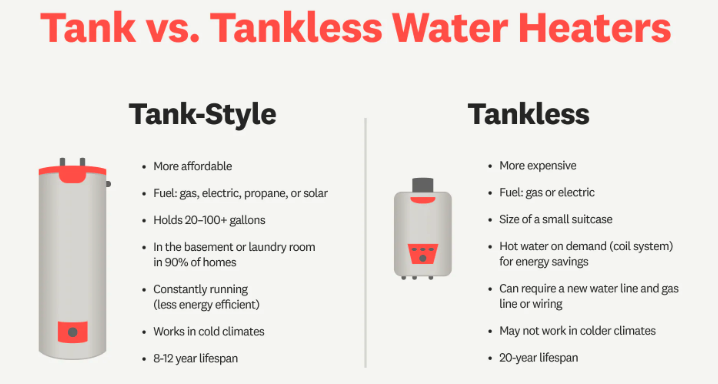
The traditional water heater has been the backbone of American homes for decades. It works by keeping a large volume of water hot at all times so it’s ready when you turn on the tap.
The Pros: Lower upfront installation cost and a simpler mechanical design that most plumbers can service.
The Cons: You have a finite limit. Once those 50 gallons are used by back-to-back showers or a large laundry load, you have to wait 30–60 minutes for the “recovery time.”
The Tankless Evolution: On-Demand Comfort
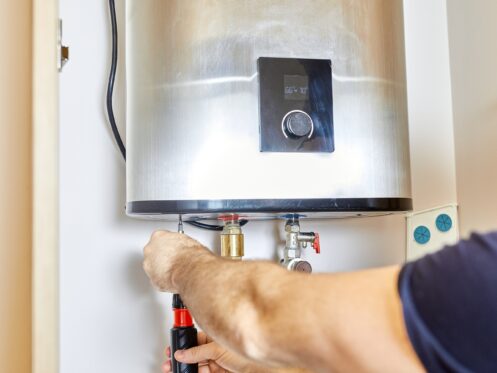
Tankless heaters do away with the big blue cylinder entirely. They are wall-mounted units about the size of a suitcase that flash-heat water only when you need it.
The Pros: They take up zero floor space and, more importantly, they never run out of hot water.
The Cons: The initial investment is higher because they often require specialized venting and gas line upgrades to handle the high-power heating process.
The 2026 Financial Impact: Rebates & Savings
In 2026, the financial gap between tank and tankless is shrinking thanks to aggressive energy incentives.
Tax Credits: Under current federal guidelines, many homeowners can claim a 30% tax credit (up to $600) for installing high-efficiency tankless units.
Local Rebates: In the Treasure Valley, utility providers like Intermountain Gas offer rebates ranging from $300 to $325 for Tier I and Tier II tankless models that meet specific efficiency ratings (typically a .87 UEF or higher).
Efficiency: Because you aren’t paying for “standby loss”—heating water while you sleep—tankless units are consistently 24% to 34% more efficient than their tank counterparts.
Final Comparison at a Glance
Lifespan: Tankless units typically last 20+ years, whereas traditional tanks usually need replacement every 10–12 years.
Space: Tankless units are perfect for smaller homes or those looking to reclaim garage/closet space.
Performance: If you have a large family or a “spa-style” master bath, tankless is the only way to ensure the water stays hot from the first minute to the last.
Common Questions: The Tank vs. Tankless Q&A
Q: Can a tankless heater actually provide endless hot water?
A: Yes. Unlike a tank that stores a limited amount, a tankless unit heats water as it flows through the system. As long as you have water and gas/electricity, you have hot water. It’s a literal “endless” supply.
Q: Is it true a tankless unit lasts twice as long?
A: Generally, yes. Traditional tanks eventually fail because water sits inside them 24/7, leading to rust and sediment corrosion. Tankless units can last 20 years or more with proper maintenance, while tanks usually top out at 10–15 years.
Q: Will I really save money on my gas/electric bill?
A: Yes. You stop paying for “standby heat”—the cost of keeping 50 gallons hot while you’re at work or sleeping. This can reduce your water heating costs by up to 34%.
Q: Does Idaho’s hard water affect tankless units?
A: It can. In the Treasure Valley, we recommend an annual “flush” or descaling for tankless units to keep the heat exchanger clear of mineral buildup. This simple maintenance ensures the unit stays at peak efficiency for its entire 20-year lifespan.
Q: What are the pros and cons of a tankless water heater vs. a standard water heater?
A: Tankless Water Heaters
- Pros: Endless hot water, 20–30 year lifespan, compact, 24–34% more energy efficient (saving $100+ annually for gas).
- Cons: Higher upfront cost ($2,500–$5,000+), complex installation, potential flow rate limitations.
- Best For: Long-term homeowners, small/mid-sized households, space-constrained homes.
- Pros: Lower initial cost ($800–$1,500), simpler, faster installation.
- Cons: Limited supply of hot water, 10–15 year lifespan, standby heat loss (heating water when not needed).
- Best For: Lower upfront budget, large families with high simultaneous demand, quick replacement needs.
Still undecided? The experts at Access Heating, Air & Plumbing are here to help you crunch the numbers. We provide custom hot water audits for homes across the Treasure Valley to ensure you get the best ROI for your specific needs.
Contact us today to schedule your consultation!

 208-855-2444